Numbing cream before laser: when it helps and when it does not
The short version. Numbing cream can genuinely help on small, sensitive areas. On large areas it is a poor trade, and applying a lot of it to a lot of skin is the one scenario where it stops being a comfort question and becomes a safety one.
The rule that matters. Ask your clinic before you buy anything. Whether it is appropriate, which product, how much, how long, and whether to cover it are all decisions that belong to the people doing the treatment.
What it actually does
Topical anaesthetic creams reduce sensation in the outer layers of skin. They take time to work — typically applied well before the appointment rather than on arrival — and they wear off.
What they do not do is change the treatment. The laser settings, the number of pulses and the result are the same. You are buying a more comfortable half hour, not a better outcome.
Where it genuinely helps
- Small sensitive areas. Upper lip, chin, bikini line, underarms — places where the discomfort is sharp and the surface area is small.
- First sessions. The first one is often the most uncomfortable, both because there is the most hair and because you do not yet know what to expect. Some people use it early in a course and stop needing it.
- If anxiety is the real issue. Sometimes the problem is not the sensation but the anticipation, and knowing something has been done about it changes the appointment entirely.
Where it is a bad trade
- Large areas. Full legs, a full back, whole arms. This is where the amount of product involved becomes the problem — see below.
- When it delays the appointment. Cream needs time. Turning up and applying it in the waiting room usually means it has not worked yet.
- When it stops you giving feedback. Discomfort during a session is information. If an area is unusually painful, that is worth your practitioner knowing, and heavy numbing can mask it.
The safety point, stated plainly
This is the part worth taking seriously, because the risk is real and easy to avoid.
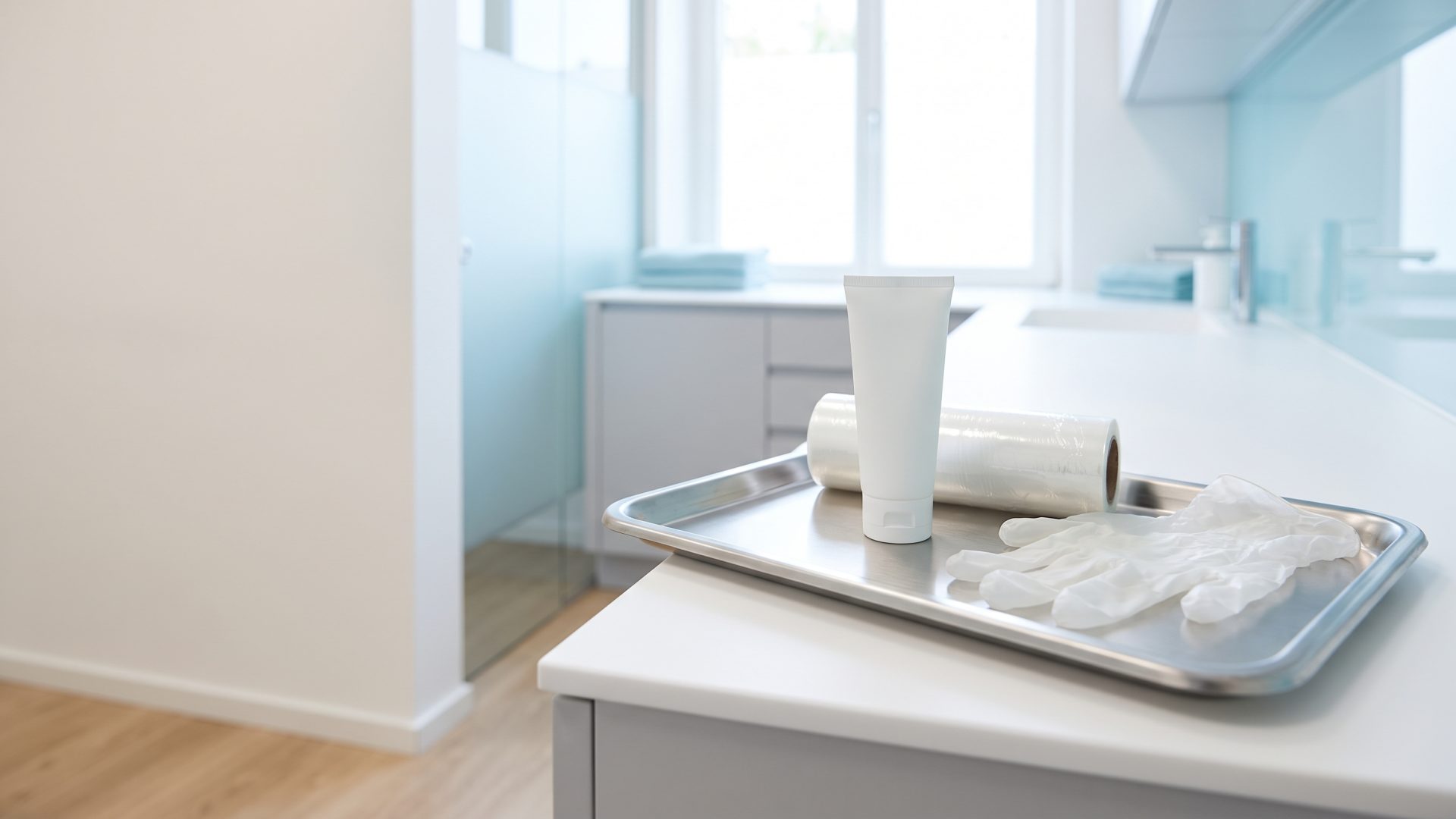
Topical anaesthetics are absorbed through the skin. Applying a large amount, over a large area, leaving it on for a long time, or covering it with plastic wrap all increase how much enters the body. Covering it dramatically increases absorption — which is exactly why some protocols specify it and why doing it on your own initiative is a bad idea.
Serious harm from topical anaesthetics is rare, but the documented cases share a pattern: a lot of product, over a lot of skin, often under wrap, often self-applied at home before a cosmetic appointment. That is the combination to avoid.
So: follow the clinic's instructions rather than a video, do not improvise the amount, do not wrap unless you have been told to, and tell your practitioner what you applied and when.
Tell them about your health, honestly
Mention any heart condition, liver problems, pregnancy or breastfeeding, medications you take, previous reactions to local anaesthetic including at the dentist, and any broken or irritated skin in the area. If you are considering numbing cream for a child or teenager, that is a conversation for a doctor rather than a clinic.
None of these automatically rule it out. All of them change the answer.
What to do instead, or as well
- Ask what the device offers. Many modern systems have integrated cooling, and some people find that sufficient on its own.
- Book when you are rested, and not in the days when you know you are most sensitive — covered in booking around your period.
- Skip caffeine if it makes you jumpy.
- Ask for breaks. Large areas do not have to be done in one continuous run.
- Speak up. The single most effective comfort measure is telling the person holding the handpiece that something hurts more than expected.
Questions to ask when you book
- Do you recommend numbing for this area, or is the device's cooling enough?
- Do you supply and apply it, or should I bring something?
- How long before the appointment, and how much?
- Should it be covered or not?
- Is there anything in my health history that changes this?
Where to book
- Downtown Montreal — 2365 rue Saint-Patrick, Unit A5
- Laval — 1655 boulevard de l’Avenir
- Saint-Léonard — 5045 rue Jean-Talon Est
- West Island — 45 boulevard Brunswick, Dollard-des-Ormeaux
Frequently asked questions
Does numbing cream work for laser hair removal?
It reduces sensation in the outer layers of skin and genuinely helps on small sensitive areas like the upper lip, chin, bikini line and underarms. It does not change the treatment itself — the settings and the result are the same — so you are buying a more comfortable session rather than a better outcome.
Is numbing cream safe before laser?
Used as directed on a small area it is routine. The risk rises with a lot of product, over a lot of skin, left on a long time, or covered with wrap, because all of those increase absorption. Follow your clinic's instructions rather than a video, never wrap unless told to, and tell your practitioner what you applied and when.
How long before the appointment should I apply it?
Ask your clinic, because it depends on the product and the area. What is generally true is that it needs time to work, so applying it in the waiting room usually means it has not taken effect by the time you are treated.
Should I use numbing cream on my legs or back?
Large areas are where it becomes a poor trade, because the amount of product over a large surface is exactly the combination that raises the risk. Ask about the device's cooling instead, and about taking breaks through a long session.
What should I tell the clinic before using it?
Any heart or liver condition, pregnancy or breastfeeding, your medications, previous reactions to local anaesthetic including at the dentist, and any broken or irritated skin in the area. None of these automatically rule it out, but all of them change the answer.
General information about comfort measures during a cosmetic treatment. It is not medical advice and no result is promised or implied. Topical anaesthetics are medicines: use them only as directed by the clinic treating you, never apply more or over a larger area than instructed, and do not cover them unless specifically told to. Discuss your health history, medications, pregnancy or breastfeeding with a qualified professional before use.
